Choosing the best interactive toy robot in 2026 means looking beyond flashy lights and scripted catchphrases. A useful robot should respond consistently, invite repeated play, and suit the child’s age and interests. Watch what happens during a real play session: Does it recognize a spoken command? Can a child understand its feedback? Does it still engage after the novelty fades? Small details matter.
Market data offers context, but not a ready-made winner. Circana’s 2024 U.S. toy industry report recorded a 6% rise in toy sales compared with 2023. That figure covers toys overall, not interactive robots specifically. It signals a lively market, but it cannot tell families which robot offers the best experience. For that, comparisons need to examine interaction quality, durability, setup, privacy settings, and the cost of any required app or subscription.
MIT roboticist Cynthia Breazeal has described social robots this way: “The most important thing about social robots is that they are designed to interact with people.” That principle offers a practical test for any interactive toy robot: Does it respond in a way that feels understandable and engaging, rather than merely repeating lines? Not every toy gets this right. Some rely on novelty more than meaningful play. This guide compares leading options through clear, everyday criteria, while noting where features and user experiences may vary.
What Is an Interactive Toy Robot in 2026?
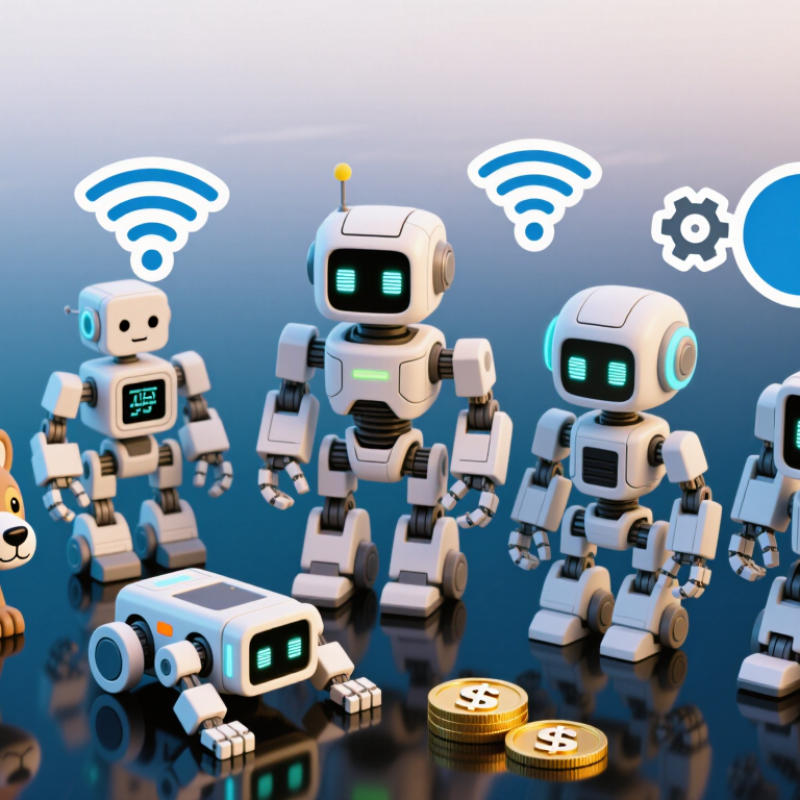
In 2026, an interactive toy robot is a play object that senses a child’s input and responds through movement, sound, lights, or changing game behavior. A microphone might detect a spoken cue; touch sensors can trigger a turn, blink, or question. Some robots follow fixed scripts, while others adapt responses or support simple coding. “Interactive” does not automatically mean intelligent. A robot repeating a phrase on cue may feel engaging, but it is not necessarily learning.
Industry data offers useful context, but not a direct measure of toy popularity. The International Federation of Robotics’ World Robotics 2024 report recorded 12.3 million consumer service robots sold worldwide in 2023, an 11% increase from 2022. These are household service robots, not toy robots. That distinction matters. For a toy, check whether it works without an app, what audio it stores, and whether its responses stay interesting after repeated play. Watch closely. A child may love a clumsy rolling turn, then ignore a polished voice feature by Friday.
What Is the Best Interactive Toy Robot in 2026?
An interactive toy robot responds to a child’s actions—such as speaking, touching, or moving—and offers feedback through sound, movement, or lights.
How to read this chart: These suggested evaluation weights are an editorial framework, not results from a product test or market survey. Prioritize age-appropriate play, engaging interactions, safety, durability, and ease of use when comparing robots.
How Do Interactive Toy Robots Work?
An interactive toy robot works through a loop: it senses something, processes the input, then responds. A microphone may detect a voice or a clap. Touch sensors can register a hand on its head, while light sensors notice a bright window. Inside, a small processor compares these signals with programmed rules. It then controls motors, lights, or a speaker. That is how a robot might turn toward a sound, blink, and answer with a phrase.
The response is not human understanding. It is a programmed reaction, sometimes supported by speech-recognition software. In a quiet room, a simple spoken command may work well. Near a television, the same robot might misunderstand or stay still. That can feel clumsy.
A child can test what works by speaking clearly and watching which sensors trigger a response. Repeated play may also reveal limits: some toys need steady Wi-Fi, fresh batteries, or a flat surface.
Check the instructions for connectivity, charging, and age guidance. Small details matter. A robot that pauses before moving may be processing input, not ignoring its user.
Still, its responses can be inconsistent, and that is worth remembering when choosing one.
What Features Distinguish the Main Types of Robots?
Interactive toy robots differ less by appearance than by what they can sense and do. Programmable models respond to button sequences or simple code, making cause and effect visible: tap a key, and the robot turns. Sensor-led robots react to nearby movement, sound, or touch. Companion-style models focus on conversation, expressive gestures, and repeated social play. These categories overlap, but they serve different needs.
The International Federation of Robotics’ World Robotics 2023 report recorded about 158,000 professional service robots sold in 2022, up 48% from 2021. Its 2024 report put 2023 sales at roughly 205,000, a further 30% increase. These figures exclude ordinary toy robots. Still, they show the growing role of sensing and interaction in robotics. That context helps explain why some toys respond to a child’s voice, while others prioritize movement or coding.
For a young beginner, clear feedback matters more than a long feature list. A robot that pauses, lights up, or changes direction after a command makes its behavior easier to understand. Older children may prefer editable routines and reliable sensors. Companion toys can feel engaging, but scripted replies may become repetitive. No category is perfect. I would not treat a lively demonstration as proof of lasting play value; check how the robot responds when the room is noisy or a command is unclear.
How Should Safety, Privacy, and Age Suitability Be Assessed?
A good interactive robot should feel engaging without creating avoidable risks. Check the casing for sharp edges, loose panels, and parts a young child could swallow. Tug gently at attached accessories. Inspect the battery compartment and charging cable, and follow the maker’s age and charging guidance. Small details matter. A warm motor or frayed cord deserves attention, not a shrug.
Privacy needs the same practical scrutiny as physical safety. Does the toy use a microphone, camera, or location feature? Read the setup screen and manual to learn what data it collects, where controls are stored, and how recordings can be deleted. Check whether play works without an account or internet connection. That is not always possible. Still, a robot that offers clear mute controls and a simple offline mode gives caregivers more choice.
Age suitability is more than matching a number on the box. Consider the child’s patience, reading ability, sensory preferences, and comfort with voices or flashing lights. Try a short, supervised session and watch what happens: Can the child operate the controls? Do they become frustrated or overstimulated? I find age labels frustratingly broad; a toy may suit one child and overwhelm another. Reassess as skills and interests change.
Which Criteria Help Identify the Best Robot for Different Needs?
The best interactive robot depends on the child, not the number of buttons or tricks. Check the maker’s age guidance, moving parts, sound level, and whether a child can stop play easily. A robot for a preschooler should respond to simple words and tolerate clumsy handling. Older children may value programmable actions or open-ended storytelling. Try the controls yourself. If setup needs constant adult help, the toy may frustrate its intended user.
Interaction quality matters more than flashy movement. The Common Sense Census: Media Use by Kids Zero to Eight (2020) reported an average of 2 hours and 24 minutes of daily screen media use among children aged eight and younger. That is not a robot-use benchmark, but it makes screen-free play, physical movement, and shared play sensible criteria. Look for clear responses to a child’s voice or touch, and check whether the robot remains useful without an app or internet connection. Small detail, big difference.
Claims of “smart” behavior deserve a closer look. The International Federation of Robotics’ World Robotics 2024 report counted 4.28 million industrial robots operating worldwide in 2023; those figures do not measure toy robots or prove a toy’s learning ability. Ask what the robot actually adapts to, and test it with ordinary phrases in a noisy room. Check microphone controls, data settings, battery life, and replacement-part availability. I would still expect occasional misfires. A little awkwardness can be part of the play.
Conclusion
Choosing the best interactive toy robot in 2026 depends on how a child will play, learn, and interact with it. These robots may respond to voice, touch, movement, or simple commands, using sensors and built-in software to create engaging play experiences. Some focus on conversation and storytelling, while others encourage coding, creative problem-solving, or active movement. Understanding these differences helps families choose a robot that suits a child’s interests and the kind of play they want to support.
Before making a choice, consider age suitability, durability, ease of use, and the robot’s need for an internet connection or companion app. Check how it handles personal information, whether its features can be managed by an adult, and if its materials and design are appropriate for the intended age group. The best interactive toy robot is not necessarily the one with the most features; it is the one that offers enjoyable, age-appropriate play while meeting a family’s priorities for safety, privacy, and learning.

