Why Is a Chatting Companion Stuffed Doll So Popular?
The chatting companion stuffed doll sits where soft toys, voice technology, and emotional comfort meet. Its appeal is easy to picture: a child whispers beside a pillow, while an adult hears a familiar bedtime prompt. The object feels warmer than a screen. It also feels less demanding than a human conversation.
Market reports suggest favorable conditions. Grand View Research valued the global plush toys market at approximately USD 11.4 billion in 2023. Its forecast expects continued growth through 2030, supported by character toys, gifting, and emotional engagement. Fortune Business Insights also projects steady expansion for the global stuffed toys market. Meanwhile, Circana’s toy-industry reporting identifies plush as a resilient category in changing consumer markets. These figures do not prove that every chatting companion stuffed doll will succeed. They show a credible commercial foundation.
Dr. Sherry Turkle, an MIT scholar of technology and human relationships, wrote, “Technology proposes itself as the architect of our intimacies.” Her observation explains both the attraction and the concern. A talking plush toy can encourage imaginative play, routine, and perceived companionship. Yet its responses may become repetitive, overly commercial, or emotionally confusing. That weakness matters. Parents may value a washable fabric body, clear volume controls, and transparent data practices more than flashy features. The category is still developing. Its future depends on trust, thoughtful design, and evidence beyond novelty.
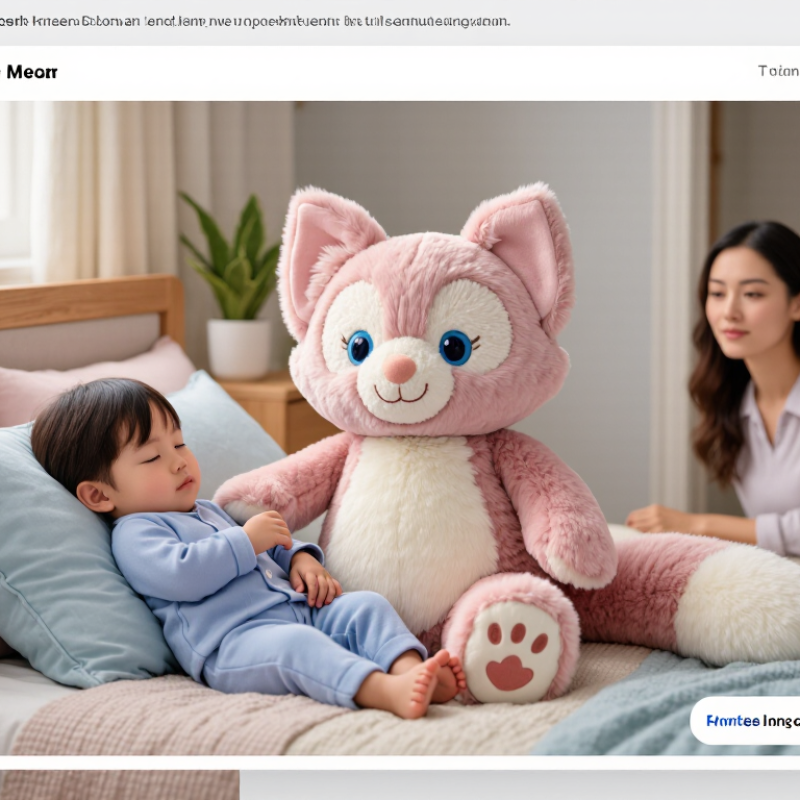
What Is a Chatting Companion Stuffed Doll?
A chatting companion stuffed doll is a soft toy designed to communicate through sound. It usually combines fabric, a speaker, microphones, sensors, and voice software. Some dolls play recorded stories, while others recognize speech and create simple replies. The conversation may happen through a button, a touchable paw, or a spoken wake word. Unlike an ordinary plush toy, it responds to the user’s presence. A child might ask for a bedtime story, or an adult might use it as a gentle desk companion. The category remains unclear, however. Some products are interactive toys, while others resemble small voice assistants with softer bodies.
Industry data shows why this format attracts attention. Grand View Research estimated the global plush toys market at about US$7.1 billion in 2023, with an expected 8.5% compound annual growth rate from 2024 to 2030. Fortune Business Insights reported a higher 2023 estimate of US$11.88 billion, reflecting different market definitions. Neither report measures chatting dolls alone. Still, both indicate strong commercial space for comfort-focused toys.
In practical use, the doll needs clear speech recognition, moderate volume, and a washable outer cover. A three-second response delay can feel surprisingly awkward. Privacy also matters when microphones are active near children. Parents should check storage settings, conversation controls, and age guidance before purchase. The technology is promising, but emotional companionship should not be confused with human care. That distinction is easy to forget.
How Does Its Interactive Conversation Feature Work?
A chatting companion stuffed doll turns a simple hug into a spoken exchange. Its microphone captures a child’s voice, while speech recognition converts sound into text. A dialogue system then identifies intent, remembers limited context, and selects a suitable reply. Text-to-speech software sends that reply through a small speaker. The conversation may feel natural, but it is not human understanding. Delays, misheard words, and repeated answers still appear.
The technology follows a wider market trend. MarketsandMarkets estimates that conversational AI could grow from about 13.2 billion dollars in 2024 to 49.9 billion dollars by 2030. Grand View Research also reports strong growth in AI companion applications, although its figures cover many devices, not only dolls. That distinction matters. Industry numbers can suggest demand, but they cannot prove emotional benefit for every child.
In practical use, the doll works best with short prompts, clear pronunciation, and a stable connection. Some systems process requests remotely, while others keep basic commands on the device. Parents should check microphone controls, data retention policies, and age-appropriate dialogue before use. The most reliable designs provide visible listening indicators and simple mute switches. Small safeguards matter.
The experience is imperfect.
A doll may comfort a lonely child during bedtime, yet it can also interrupt quiet play or encourage constant prompting. Developers should test responses with real families, not only laboratory scripts. Better conversation requires safer data practices, transparent limits, and careful observation of how children actually use the toy.
Why Is a Chatting Companion Stuffed Doll So Popular? - How Does Its Interactive Conversation Feature Work?
| Data Dimension | Typical Feature or Mechanism | How the Interaction Works | Why It Increases Appeal | Important Consideration |
|---|---|---|---|---|
| Physical comfort | Soft fabric, rounded shape, and a lightweight stuffed form | The doll combines tactile comfort with electronic functions placed inside or attached to the toy. | Users receive both a familiar plush companion and an interactive experience. | Electronic parts should be securely enclosed, and washable areas should be clearly identified. |
| Voice input | Microphone for detecting spoken words | The microphone captures speech and sends the audio to an on-device or connected speech-recognition system. | Speaking is more natural and accessible than typing, especially during play or relaxation. | Recognition quality can decline because of background noise, distance, accents, or unclear pronunciation. |
| Speech recognition | Automatic conversion of speech into text or commands | The system identifies spoken language, filters some noise, and converts the detected speech into usable input. | The doll can respond to questions, greetings, requests, and simple conversational prompts. | Users should know whether audio is processed locally or transmitted to an online service. |
| Conversation processing | Rule-based dialogue or an artificial-intelligence language system | The system interprets the request, considers the conversation context when supported, and selects or generates a reply. | More flexible responses make the toy feel less repetitive and more socially engaging. | Generated responses may be inaccurate, unsuitable, or limited by the system’s language and safety controls. |
| Voice output | Small speaker and text-to-speech or pre-recorded audio | A written response is converted into spoken audio, or the device plays a stored sound. | Audible replies create the impression of a responsive character and support hands-free use. | Volume should be adjustable, and speech clarity depends on speaker quality and surrounding noise. |
| Conversation memory | Short-term context or optional saved preferences | The system may retain recent messages or selected preferences to make later replies more relevant. | Personalized responses can make the companion feel more familiar and consistent. | Data retention, deletion options, and parental controls are important privacy factors. |
| Connectivity | Bluetooth, Wi-Fi, or a paired mobile device | A connection may transmit audio or text to remote computing resources and return the processed reply. | Online processing can support more advanced language functions than a basic offline device. | A weak connection can cause delays or prevent interactive features from working. |
| Response speed | Processing time between a user’s speech and the spoken reply | The system records input, interprets it, generates or selects a response, and plays the result. | Shorter pauses make the exchange feel more like a natural conversation. | Response time varies with network quality, server load, speech complexity, and device capability. |
| Emotional design | Friendly voice, character-based language, sounds, lights, or simple movements | Non-verbal signals are synchronized with selected phrases or conversation events. | Anthropomorphic cues encourage attachment, imaginative play, and repeated use. | Emotional cues should be presented as design features rather than evidence that the toy has feelings. |
| Use cases | Storytelling, question answering, language practice, reminders, and casual conversation | The user selects an activity through speech, a button, an application, or a predefined conversational cue. | A single product can support entertainment, companionship, learning, and routine-building. | The toy should not replace qualified care, education, medical advice, or trusted human relationships. |
| Privacy and safety | Microphone controls, visible recording indicators, account settings, and content filters | Users can manage listening permissions, data collection, stored conversations, and restricted topics. | Clear controls build trust, particularly when children or private conversations are involved. | Users should review consent requirements, privacy policies, account security, and age-appropriate safeguards. |
Note: Interactive capabilities vary by design. Some companion dolls use fixed responses, while others rely on connected speech and language-processing services.
Why Do People Enjoy Emotional Companionship from It?
A chatting companion stuffed doll feels comforting because it combines warmth, touch, and gentle conversation. Its soft fabric can rest against a person’s arm during a stressful evening. A calm reply may make an empty room feel less silent. People can share small thoughts without worrying about interruption or judgment. They might describe a difficult meeting, a lonely lunch, or tomorrow’s unfinished plans. The interaction creates a simple emotional routine. Quiet comfort matters.
Emotional companionship often comes from feeling noticed, even when the listener is artificial. A person may greet the doll after waking and talk beside it before sleeping. This repeated habit can support reflection and reduce the sharpness of loneliness. Many mental-health professionals recognize that safe routines and sensory comfort can help people manage everyday stress. However, the doll does not truly understand feelings. Its replies may sound caring, but they are produced through programmed or trained responses. That difference deserves honest attention.
In my experience, the strongest appeal is not perfect conversation. It is the permission to speak freely. Some users may also enjoy playful replies, soft sounds, or a familiar face on a difficult day. Still, relying on one companion for every emotional need could become limiting. Human relationships offer shared responsibility, real empathy, and unexpected understanding. I sometimes wonder whether comfort becomes healthier when the doll opens a door to people, rather than quietly replacing them.
What Age Groups and Needs Does It Serve?
A chatting companion stuffed doll can serve different age groups for different reasons. For preschool children, it offers gentle prompts during pretend play. A child may hug the doll, ask a question, and wait for a reply. These small exchanges can encourage turn-taking, vocabulary, and emotional expression. The doll may also comfort a child during bedtime or quiet travel. However, it should not replace responsive conversation with parents, teachers, or caregivers.
School-age children may use it to rehearse reading, spelling, or social situations. A shy child might practice saying, “Can I join?” before speaking to classmates. The experience feels less risky because the doll does not show impatience. Still, responses can sound repetitive or oddly timed. That weakness matters. Adults should check whether the language suits the child’s age and supervise younger users.
Older adults may value the doll’s predictable voice and easy interaction. It can provide reminders, familiar questions, or a simple way to fill quiet hours. People living alone may appreciate hearing a friendly response without managing a complicated device. Users with memory difficulties may benefit from repetition, but caregivers should monitor confusion and emotional dependence. Privacy settings deserve attention, especially when conversations are stored or connected online. Comfort is useful, yet real human contact remains irreplaceable.
What Are Its Benefits, Limitations, and Safety Considerations?
Why Is a Chatting Companion Stuffed Doll So Popular?
What Are Its Benefits, Limitations, and Safety Considerations?
A chatting companion stuffed doll combines soft texture with spoken interaction. Its gentle voice can make bedtime feel less empty. Children may practice greetings, questions, and simple emotional language through repeated conversations. Older adults might also enjoy a familiar prompt during quiet afternoons. The physical shape matters. Holding a soft doll can feel more comforting than using a cold screen.
Its benefits have clear limits. The doll may encourage conversation, but it cannot replace attentive caregiving, friendship, or professional mental-health support. Some responses may sound confident yet remain inaccurate. This matters when users ask about health, emergencies, or serious worries. Long-term evidence on emotional dependence remains limited. That uncertainty deserves honesty. A child might also lose interest quickly, especially when conversations become repetitive.
Safety begins with age-appropriate settings and active supervision. Caregivers should check volume, battery heat, detachable parts, and washable surfaces. Keep small components away from young children. Review how voice recordings are stored, processed, and deleted. Use strong passwords when an internet connection is involved. Avoid sharing names, locations, school details, or private family events. The doll should not listen continuously without clear consent. Set quiet hours, too. Regularly inspect the stitching and charging cable. A calm voice is helpful, but safe boundaries matter more.
FAQS
A microphone captures the child’s voice. Speech recognition changes sound into text. A dialogue system selects a reply. Text-to-speech plays it through a small speaker.
No. It identifies patterns and limited context. It does not possess human feelings or judgment. Misheard words and repeated replies can happen.
Use short prompts and clear pronunciation. Keep the connection stable. Reduce background noise near the microphone. Keep it simple.
Children may practice greetings, questions, and basic emotional language. A soft body can feel comforting during bedtime. It may support quiet moments, but not replace people.
No. It cannot replace attentive caregiving, friendship, or mental-health support. Serious worries require a trusted adult or qualified professional.
Review recording, processing, and deletion policies. Check whether conversations leave the device. Avoid sharing names, locations, school details, or family events.
Use age-appropriate settings and active supervision. Check volume, battery heat, stitching, detachable parts, and charging cables. Keep small components away from young children.
Some systems may process requests remotely. Listening should require clear consent and visible indicators. Use the mute switch and set quiet hours. Not always.
The doll may comfort a lonely child, but it can also interrupt quiet play. Conversations may become repetitive. I may be wrong about every response, so observe usage carefully.
Conclusion
A chatting companion stuffed doll is a soft, friendly toy designed to offer comfort through simple interactive conversation. Using built-in sensors, voice recognition, and pre-recorded or generated responses, it can react to words, questions, and touch in an engaging way. Rather than replacing human relationships, the chatting companion stuffed doll creates a warm sense of presence that may help users feel heard and less alone.
Its appeal comes from combining the emotional comfort of a plush toy with playful communication. Children may enjoy storytelling, practicing language, or expressing feelings, while older users may appreciate reminders, gentle conversation, or calming companionship. It can also support people who experience loneliness, stress, or difficulty starting conversations. However, its responses may be limited or inaccurate, and it cannot understand emotions as deeply as a person. Safe use requires age-appropriate design, careful supervision, privacy protection, volume control, and clear limits on relying on the doll for emotional or medical support.
Blog Tags: