Detailed technical, compliance, and supply chain clarifications compiled by our senior engineering and export logistics directors for global procurement officers.
1. What is the typical Minimum Order Quantity (MOQ) structure for off-the-shelf vs. bespoke OEM AI plush toys?
+
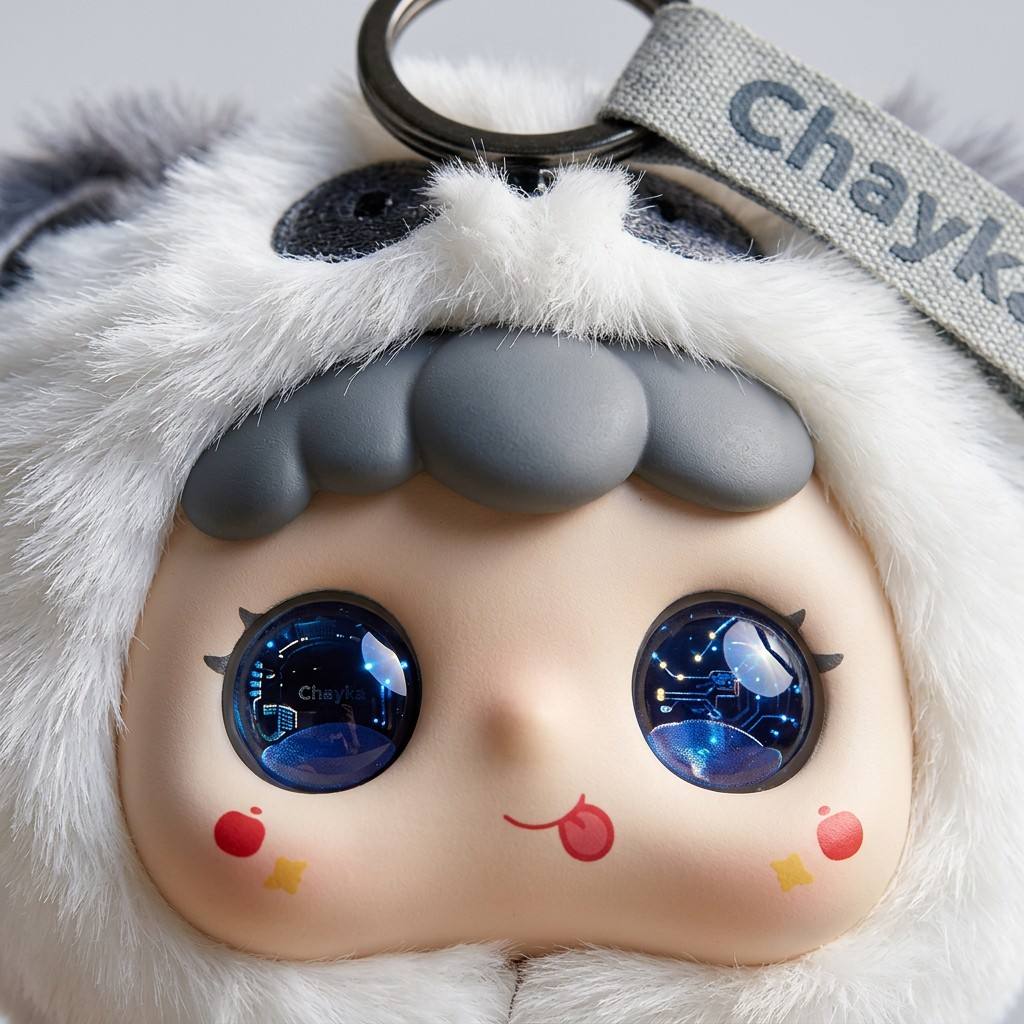
For standard catalog designs (such as our featured AI interactive pendants and bilingual animals), we offer low evaluation sampling starting from just 1 to 20 pieces. This allows commercial buyers to perform domestic market validation, acoustic lab assessments, and retail focus groups. For semi-custom OEM projects (involving custom embroidered logos, branded retail packaging, pre-loaded custom system prompts, and tailored wake-words), the typical MOQ starts at 500 to 1,000 units. For fully bespoke ODM projects requiring custom plush molds, unique PCB layout designs, and specialized electronic eye displays, tooling thresholds generally start at 2,000 to 3,000 units.
2. How does the factory manage child voice data privacy, COPPA compliance, and EU GDPR Article 8?
+
Data privacy is foundational to our engineering architecture. Our AI modules utilize end-to-end tokenization. The child's raw vocal audio is captured by the local mic array, processed through an on-board noise suppression and wake-word algorithm, and converted to encrypted mathematical vectors. Audio is streamed via TLS 1.3 encryption directly to secured enterprise cloud endpoints (AWS / Azure / private cloud). No persistent voice recordings, biometric profiles, or identifiable family names are ever logged or sold to advertising networks. Furthermore, products feature physical hardware power disconnect toggles that instantly terminate both power and microphone functionality.
3. What international safety, RF, and chemical certifications accompany these smart plush toys?
+
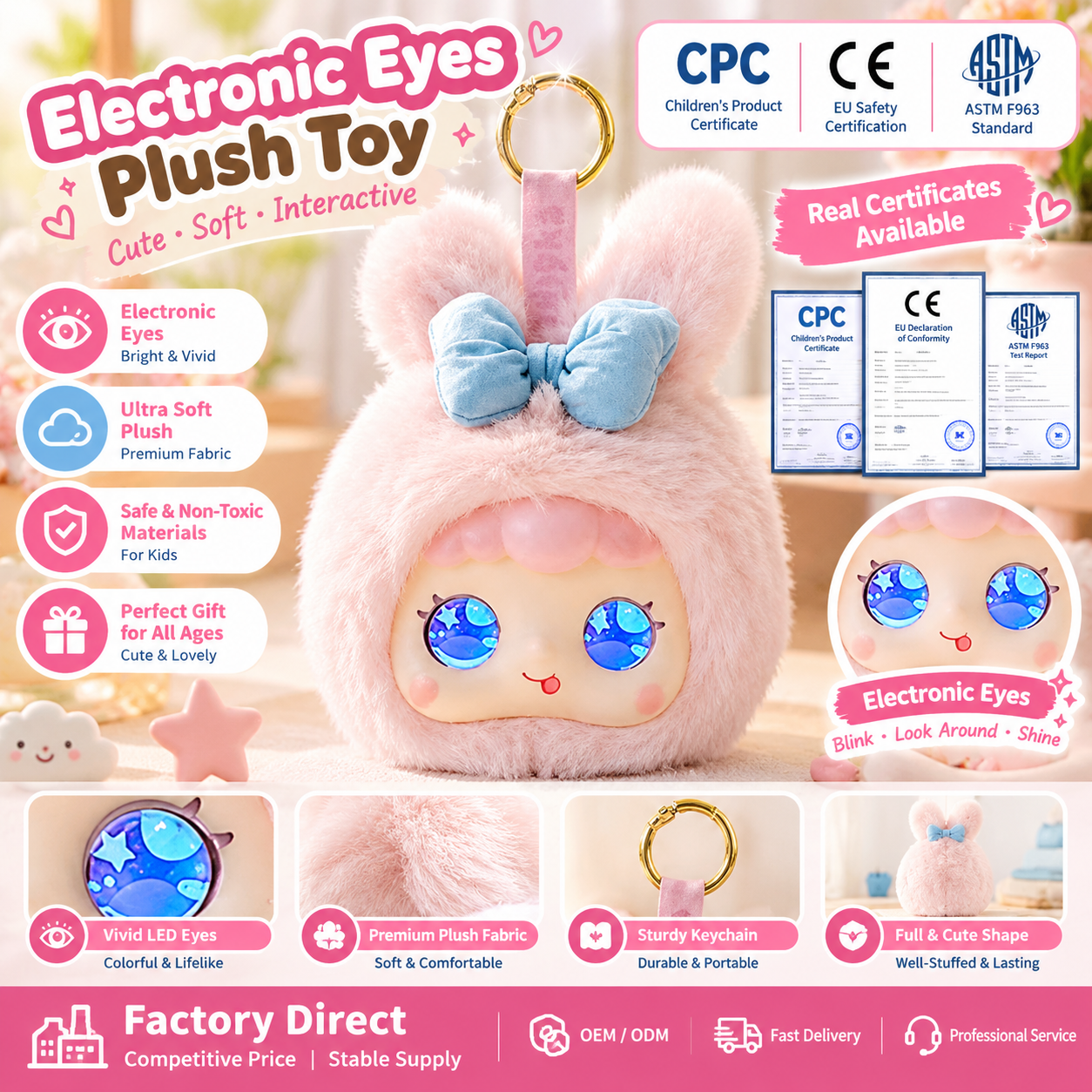
Every AI plush unit shipped globally is engineered to pass the dual requirements of electronic device safety and infant/child toy safety. For North America, our products comply with ASTM F963-23 (physical, mechanical, flammability, heavy metals), CPSIA, and FCC Part 15B/15C for intentional radiators, supported by a formal Children’s Product Certificate (CPC). For the European Union, products carry the CE mark under the Toy Safety Directive 2009/48/EC (EN 71-1, EN 71-2, EN 71-3), EN 62115 (electric toys safety), and the Radio Equipment Directive (RED 2014/53/EU).
4. How is the plush fabric cleaned or maintained without damaging the sensitive electronic core?
+
We employ two primary structural approaches depending on target customer demographics: 1) Removable Core Architecture: The smart electronic module, battery, speaker, and microphone are sealed in an impact-resistant internal capsule accessed via a child-proof safety zipper or screw-locked hatch, enabling the outer plush skin to be separated and machine-washed; 2) Hydrophobic Antimicrobial Fabric Coatings: For models with distributed tactile sensors in the limbs, fabrics are treated with high-durability hydrophobic coatings, enabling rapid surface wipe-downs using medical-grade sanitizing wipes without liquid permeating the internal electronics.
5. What battery chemistry and safety measures are integrated into the internal power supply?
+
We strictly utilize grade-A Lithium-Polymer (LiPo) cells or cylindrical Li-ion cells certified under UN38.3, IEC 62133, and UL 1642. The battery packs are integrated with an active Protection Circuit Module (PCM) preventing over-voltage, over-current, short-circuit, and deep over-discharge. Mechanically, the battery is anchored inside a flame-retardant (UL94-V0) polycarbonate bay isolated from the soft PP-cotton filling to prevent thermal transfer during continuous fast-charging via modern USB Type-C connections.
6. How do you address conversational latency and ensure natural child engagement?
+
Conversational latency exceeding 1.2 seconds breaks the illusion of interacting with a living companion. Our engineering stack optimizes three critical phases: 1) Highly optimized Voice Activity Detection (VAD) that recognizes utterance completion within 200ms; 2) Edge-to-cloud streaming WebSockets that simultaneously transcribe and generate semantic replies; 3) Low-latency Text-to-Speech (TTS) stream processing that starts audio playback before the full sentence has finished generating. Total round-trip latency is consistently maintained between 650ms and 850ms in standard network conditions.
7. Can we customize the AI personality, proprietary voice model, and brand vocabulary?
+
Yes. We provide complete prompt engineering, system persona configuration, and fine-tuning pipelines for enterprise buyers. Whether you want your mascot to speak with a specific accent, reflect the humor and tone of an intellectual professor, or act as an empathetic mindfulness coach, our software engineering team builds custom system guardrails. We can also integrate your brand's unique IP lore, slogans, and corporate history while strictly filtering out toxic, adult, or inappropriate conversation topics.
8. What are the sampling lead times, tooling costs, and mass production cycles?
+
For catalog products, samples dispatch within 48 to 72 hours. For custom OEM plush sampling (developing 2D sketches into 3D plush clay prototypes and master fabric cutting templates), the turnaround is typically 7 to 12 working days. Prototype PCB engineering and custom software firmware flashing require approximately 15 working days. Once the golden sample is formally signed off, mass production typically takes 25 to 35 calendar days for runs ranging from 2,000 to 20,000 units.
9. What shipping terms (Incoterms) and international payment structures are supported?
+
We accommodate global shipping modalities including FOB (Shenzhen/Hong Kong), CIF, CFR, EXW, FCA, and fully cleared DDP (Delivered Duty Paid) via ocean freight, air express, or cross-border rail. Payment terms include standard wire transfers (T/T with 30% deposit and 70% against Bill of Lading), Irrevocable Letters of Credit at sight (L/C), PayPal, Western Union, and secure Alibaba Escrow, accepting major currencies including USD, EUR, GBP, AUD, CAD, and CNY.
10. Can the smart toy operate in offline environments without a continuous Wi-Fi connection?
+
Yes. While broad encyclopedic and real-time open-domain Q&A requires an active network bridge (Wi-Fi or cellular hotspot), our hardware platforms can be programmed with offline fallback modes. In offline environments, the on-board SPI Flash storage plays back dozens of pre-compiled bedtime stories, educational rhymes, lullabies, and responds to 20–30 direct offline voice commands (e.g., "sing a song", "tell a joke", "bedtime mode") without sending data packets over the web.